Showing posts with label novel writing. Show all posts

Tuesday, January 8, 2013

My novel, Moving (a life in boxes), is now an ebook!

cover for MovingMy newest novel, Moving (a life in boxes), has just been released as an ebook.The story is about a married couple, Jed and Lila, who are compulsive movers. For them, moving boxes, packing tape, and open houses are the ultimate aphrodisiacs. They meet on a moving day, Jed proposes on a moving day, and they end up moving 18 times in 18 years. They move for fun, to recover from tragedy, and for new opportunities—until Lila decides she wants them to put down roots, in Boston.  Her decision pushes their marriage to its limits.

This is a novel about a marriage challenged by wanderlust, regular old lust, obsession, infertility and adoption, and race. Really, it's a book for grown-ups about marriage and what happens when you and the person you married aren't the same people you were at your wedding.

Moving (a life in boxes) is available from Amazon, Smashwords, and Barnes & Noble, for $2.99.  (You don't need to have an e-reader to read the book--at Smashwords you can buy a pdf that you can read on your computer, or you can read Kindle books on your PC with a free app.)

I hope you'll check it out and help spread the word.  Any actions you take--rating the book on Amazon or Goodreads, reviewing the book on Amazon, Goodreads, Barnes & Noble, or Smashwords, or mentioning it to your friends and followers on Facebook and Twitter--will help this book find an audience.  Word-of-mouth from my friends and colleagues will be the single most important factor in the success of this book.  The word started going out yesterday, and I'm already grateful for the responses I've gotten.

Tuesday, December 4, 2012

My Current Juggling Act

Pat juggling clubs
Juggling takes a lot of focus, whether it's clubs or writing projects.
Now that farming season has ended, my writing season has picked up full speed.  I've got a whole bunch of projects that I'm juggling at the moment, as well as upcoming productions.  Here is some of what I'm up to:
  • My latest novel, Moving (A Life in Boxes), will be coming out as an ebook in about two weeks.  I've got make sure people know about it and finish getting it proofread and formatted.
  • I'm about to do revisions on the book for a musical (a commissioned work) adaptation of Penny Noyce's novel, Lost In Lexicon.
  • I just finished a first draft of a new full-length play, Distant Neighbors, and am working on it in Rhombus and in the New Voices @ New Rep program.
  • We start rehearsals for Fire on Earth with Fresh Ink. on Monday, and I'll be making revisions fairly steadily until we open on February 1 at the Factory Theatre in Boston.
  • I have a couple short plays in the One-Minute Play Festival coming to Boston Playwrights Theatre. Rehearsals start soon, but revisions are quick on short plays.
  • I'm supposed to write a ten-minute play, set in a garden, for production this spring in London by a small company there.  (They performed Pumpkin Patch last year.)
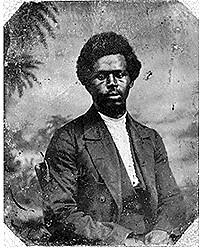
  • If I can clear the decks a little, I'm ready to finish the next draft of an historical novel about Civil War hero Robert Smalls.
  • And I have two short plays in the upcoming New Works Festival at the Firehouse Center for the Arts in Newburyport (but shouldn't have to do rewrites on them).
It's a good thing I'm not farming over the winter.  It seems like a lot of balls to have in the air, but I actually find myself more productive when I'm juggling a lot of projects at once.  It forces me to stay disciplined.  And one thing I've learned over my years writing is that I never know which project might suddenly catch fire and find the right people at the right time and have a chance to leap forward to find a larger audience.  Maybe it'll be one of these.  Maybe it'll be the next one.  Or the one after that.

And sometimes I miss a ball and they all come crashing down for a while.  But like in juggling, it's just a matter of picking them back up and starting over.
Pat picking up fallen clubs
Yep, every juggler drops the balls sometimes. There's nothing to do but pick them up and start over.

Wednesday, June 13, 2012

The Juggler Interviews, #12: Diana Renn


Diana Renn and I have been in the same fiction writer's group since 2005.  She's a prolific writer and reviser, and will tear a story or novel apart and rebuild it from bottom up and make it seem all so easy.  She's also a mother of a young, son, now 5 years old.  Her debut novel, Tokyo Heist, a YA mystery, will hit the shelves this week.  We saw many drafts of it in our group, and it's a thrill to see it finally published and have a chance to reach a well-deserved broad audience.  For those of you in the Boston area, she'll have her book launch this Saturday, June 16, at 2pm at Newtonville Book.

She took some time to answer questions in the midst of all the book launch preparations:

It feels like you started bringing in pieces of Tokyo Heist to our writers group quite a while ago (perhaps before I was even a member), how long have you been working on it?

I started writing Tokyo Heist (with a different title, and as an adult novel) in the fall of 2004. From first word to publication, the journey has taken almost eight years!

One thing I’ve always admired about you as a writer is your ability to rewrite, and rewrite some more, and fearlessly tackle anything that wasn’t working. Did this talent come in handy in the process of working with your agent to find a publisher, and then working with an editor?

Thanks! This book was revised extensively, including three times starting over almost from scratch. Revision doesn’t scare me; drafting does. When I’m revising, I have something to work with. I love the feeling of making something stronger.

I actually didn’t do too much revising for my agent. I did revise extensively for my editor. When I got my first edit later (several single-spaced pages of notes!), I admit I was daunted, but then I threw myself into the job. I was glad I’d had so much revision experience; I knew I’d get through it and the book would come out better. Also, I’ve worked as an editor and a writer in educational publishing, and I’m sure that experience trained me to be a good reviser, especially with deadlines in mind.


You had your son when you were in the thick of writing the main drafts of Tokyo Heist, and then were busy being the parent of a pre-schooler during the sale and subsequent editing. How did you manage to get it all done? What’s your writing schedule like? Do you have a certain routine?

I pushed to finish my first complete draft in the months before my son was born; I finished with just a couple days to spare. I was terrified that once he was born I would never write a complete novel. (I’d written two other attempts at novels, but with many missing scenes – they didn’t feel “complete” to me). At one point I didn’t even care about selling this book. I just wanted to see the words “the end.”

For the first few months after my son was born, in 2007, I set the novel aside. I worked on short stories and essays. One night, in a sleep-deprived haze, I looked at that “finished” novel manuscript of what would become Tokyo Heist. I realized much of what I’d written – 80% of it – really wasn’t working. I’d reached “the end,” but in the wrong way. I nearly trashed it, but I still loved the premise, and some characters, so I started over.

I was fortunate to have some babysitting help, and a son who loved to nap. I worked those naps. Sometimes he only slept in the car, though, so I’d drive to a remote location and work on the novel in the car, on my laptop. I think that’s how I pushed through the next draft. Feedback from my wonderful writing group also kept me going. Some people like to wait to show a complete draft to beta readers, but honesty, if I’d had no sense of audience, I’m not sure I could have pressed on. I was very isolated in those early months of being a mother, and isolated as a writer; I’d given up my teaching job by then. Writing group feedback was a huge motivator and got me banging out more pages.

By 2009 I felt the novel was ready for querying agents. I did that for the better part of a year, with no luck – lots of partial and full requests, but no takers. I got two fresh sets of eyes on the manuscript and some good advice. I revised YET AGAIN. My tireless writing group read the novel YET AGAIN. I queried YET AGAIN. Now my son was napping less, and my babysitting help was less reliable. He wasn’t adjusting well to an attempt at daycare. I had fewer hours to work with but kept querying, spending any available time researching agents and sending the thing out. Finally I got my agent in April 2010. I revised a little for him and he sold the book to Viking in July 2010.

Revising for the editor, which happened in waves over 2011 (mostly last spring and summer) felt harder, time-wise, than drafting. My son was in preschool, which should have given me more time, but he had some health issues and other things going on, and missed a lot of school. It was scary to have real deadlines hanging over my head and a kid who needed to be out of school, or needed to be ferried to various appointments, or just needed attention. I switched to the night shift a lot as I revised.

I don’t remember sleeping much in 2011.

Two of my biggest deadlines happened to hit on two separate weeks when we’d scheduled family vacations last year. This meant our Cape Cod summer rental turned into an office and my husband took on more of the childcare. This meant our family reunion in Seattle was spent with me working in a hotel room a lot while other people entertained our son. In retrospect, I feel lucky these deadlines hit at vacations because I had family around to help and didn’t have to hire sitters.

How did I manage to get it all done? I don’t really know. I think I just scavenged for time whenever I could, and sacrificed some other time-consuming things, like watching TV. Like sleep.

I no longer have a routine. I feel like any time I set a schedule, the rug gets pulled out from under me. Something will go awry in the house, or a school vacation will hit. (Why are there so many school vacation weeks?) In general, though, I have gone back to that night shift, drafting new material from roughly 9 pm to midnight, and using any daytime hours I have to edit/revise that work, catch up on email, and work on promotional activities, including keeping up with my mystery writers blog. The night shift works for me for drafting; it’s the only uninterrupted time I can absolutely count on these days.

You’ve completely leaped into the world of YA publishing and YA mysteries over the past year or so, with your blog, Sleuths, Spies, and Alibis, and Apocalypsies, plus your own personal blog. Plus rewrites. Plus being a mom. And writing new stuff. How are you juggling all of it?

Honestly, I’m in awe to be included in your “Juggler” interview series because when I read about the other people you’ve featured, they seem to get SO much done, juggling SO much more than I do. But then I have to remind myself not to make comparisons, and to remember that some days and weeks are more productive than others. And even if I took something out of the equation – motherhood, rewrites, my mystery blog, whatever – I’d still be juggling, because I’ve always had too much on my plate. I think that’s just how I am. I take on a lot.

I’ve learned to put different weight on different activities and forgive myself if some things slide. My personal blog gets updated weekly, if I’m lucky, and I’m fine with that. I’m involved in an amazing debut author group, the Apocalypsies, with 160 authors, and I try to support this group and participating as much as I can, while accepting that I simply can’t respond to every email or post, or wish every single person a happy birthday, or some weeks I’m on Twitter and some weeks I’m not. I’m starting to pull back on social media (even though with a book launch I know I shouldn’t) so that I can focus more energy on writing the next book. A few years ago I used to try to work harder to get more things done. Now I’m feeling a shift of energy, like I’d rather get less done, but do less better, and not feel so scattered.

I used to set weekly or daily goals for productivity. Now I don’t. I inevitably fail to make those goals – often due to circumstances beyond my control – and then I just feel bad. I make modest lists of morning and afternoon goals.

I’ve seen the book since its early forms. When you started out, you weren’t really writing a lot of YA material During the editing process, how have you and your editor worked to shape the book to make sure it would be a book that met the expectations of young adult readers?
I made the conscious decision to make the novel a YA novel back in 2006. But I didn’t actually read a lot of YA until a couple of years ago – until after the novel sold. In a way that’s a good thing. People say the book is “original” and “unique” in the YA market, and I think it’s because I had no idea what was out there. My editor and I did do some work to add more exciting scenes that would appeal to YA readers. We changed the title from the original one to have more teen appeal and to allow us to use an edgy cover.

Now I read almost exclusively YA novels – partly because I love the genre, partly because I know many YA authors now, and partly because I love participating in the community of children’s fiction, and keeping up with current and classic YA books helps me to do that.

Now that you’re a mother, did you find that some of your sympathies towards your characters shifted a little? Or was it a good escape from being a mother to inhabit the character of Violet for a while every day?

It was easy tapping into my inner teen and getting into Violet’s head. And refreshing. An escape. My daily life is filled with responsibilities, so it was fun to hang out with Violet in her world -- getting into trouble, sneaking around, outrunning mobsters, etc. However, being a parent does enable me to sympathize with the parent characters. I can’t think about them too much. Sometimes I’d read over a scene where Violet’s grousing about her dad, and I’d think, “Hey, he’s just doing the best he can! Nobody told ever told him how to parent!” But it’s Violet’s book, not her dad’s, and so she gets to grouse.

What’s next? I love the character of Violet—any chance we’ll get to see her in another book someday?

I’m currently working on another YA mystery, with very different characters and a different setting. Tokyo Heist sold as a standalone, but I’d love to write another Violet mystery someday, and have lots of ideas, so we shall see!

Thanks, Diana! And good luck with the release!

Thanks for the interview; it’s great to be in the company of such amazing jugglers! 


Here's new book trailer for the Tokyo Heist:


You can visit Diana's web site at:  www.dianarenn.net.  You can also follower on Twitter at @dianarenn   or on Facebook.

Tuesday, May 29, 2012

The Juggler Interviews, #11: Laura Harrington


Laura Harrington is an award-winning writer of plays, musicals, operas, radio plays, and her first novel, the heartbreaking and lovely Alice Bliss, has been met with critical acclaim.  She's also the mother of a daughter who recently graduated from college.  I've been a big admirer of Laura's work for the stage, and now I'm a big fan of her novel, too.  She's off in London for the paperback release of Alice Bliss right now, but took some time to answer some questions for me.


You’ve had so much success writing for the stage, both plays, musicals, and operas. What made you decide to write a novel?

A few things conspired to open up this world to me. I was given this incredible award for my music theatre work that gave me two years of writing time. Which was an awe-inspiring moment – so much validation for my theatre career coupled with so much possibility. But I didn’t immediately think: Great! I can’t wait to write my next musical. Instead I thought: This is my chance to be a beginner again, to re-connect to the creative process by trying to do something I’ve never done before. I also wanted to pick up my pen without thinking about anything other than story. No worries about the size of the cast, the cost of production, etc.


Did you find yourself able to do things in prose that you hadn’t been able to do in script form?


Yes and yes and yes. It was so liberating to be able to spend time with a character’s interior voice. I also loved being able to tell a story that unfolded slowly. And it was just plain fun to be able to play with language in new ways.

from the TN Rep production of THE PERFECT 36: "A Woman's Voice"

Your writing for stage often deals with historical topics, and isn’t necessarily grounded in strict realism or traditional styles. For Alice Bliss, for which the writing is heartbreaking and lovely, you chose to write a contemporary story, grounded in realism. How do your approaches to tackling prose and drama differ?

As for all that history: I write about what obsesses me, the things I can’t stop thinking about. In some ways, my stories choose me. I’m also drawn to the voiceless and the displaced. And I’m deeply disturbed about war and wish that I could do something to make a difference.

Is my approach to writing prose and drama really different? I’m not sure. For me it’s all about voice. Once I have the voice and the rhythm of the book, the play, the character, then I just follow it through the first draft. I’m sure that sounds overly simplistic, but it’s as though the world of the play or the book has a voice, a style, a look, a feel and so does each character’s individual voice. I’m fascinated by layering voice/ image/ sound/ smell, etc. For me writing comes from a very, very physical place, from specific physical observations, from all the senses, no matter what genre I’m in.


Your daughter is a recent college graduate. In this interview series, I’ve talked a lot to writers who are in the thick of raising kids. You’ve succeeded!

Thank you! She’s a great kid.

And you’ve written so many plays and operas. How did you do it?
I am blessed with a lot of energy and focus. People are always commenting on how self disciplined I am, but it’s more that I love my work. And, to be honest, I’m pretty driven and ambitious.


What advice can you give those parents of small children (and teenagers) who are also trying to write?

Don’t think about the big picture. Keep it simple and small and write a page a day. I love the story of Andre Dubus III writing his first book. He had 4 kids, was working construction full time and spent 20 minutes a day writing while parked at the cemetery before going home.

In some ways playwriting is ideal for short bursts of time because you really can write a play one scene at a time. I could not have written a novel while my daughter was young. It’s no accident that my writing world expanded as my daughter headed off to college.


I find that when I’m working on a novel, I need a long stretch of predictable time to write, whereas a play is so much shorter, so I can get more done in bursts. What’s your writing schedule like? Does it vary a lot, depending on whether you’re working a play, opera, or novel?


The actual writing process, the day-to-day activity of writing is the same no matter what the form. You have to show up and give yourself to it. But the book took more time, lots more time. I found I had to make my life very, very quiet in order to create the mental space for a book.

One of the best things about writing a book is that the fun part – what I think of as the honeymoon phase when you’re living inside the work – lasts longer.


It seems like Alice Bliss has really struck a chord with many readers, of various ages. You’ve attended many productions of your work for stage. How does the response from readers of Alice Bliss compare to the response you’ve had from your plays and operas?

A reader lives in the world of the book for much longer than an audience member lives in the world of a play. I would say that the response of readers has been more intense, perhaps because of that longer, more personal and more private relationship with a book.

from Pilgrim Theatre production of N (Bonaparte) directed by Kim Mancuso

Marketing a book is very different from marketing a play. These days, the author of a book bears a lot more responsibility for getting the word out, even when you’re with a large publisher. Talk about some of the lessons you’ve learned about marketing a book. Do you think they’ll have any use for you in your work for stage?

Book marketing feels very different from marketing for the theatre because - if you’re lucky - it lasts such a long time. I was working intensely on the hardcover release of Alice Bliss for a solid 6 months. And now it’s time to work on the paperback release, which will be more extensive.

Lessons learned? Getting up to speed with social media, learning how to reach out to and engage with readers and fellow writers. Learning how open and friendly and supportive novelists can be. Meeting dozens of book bloggers – a world I did not even know existed. There is a very generous spirit at the moment and the world of books feels very open. I don’t know if this openness will last, or whether it is just the first flush of all of this social media potential.

The contact and connections with other writers has been amazing and really fun. I’ve found people who are friendly, open, and supportive; I’ve met and corresponded with writers in South Africa, England, Sweden, Canada, and all over the US.


What are you working on now?

I’m about to begin work on a commission from Playwrights Horizons, to write Alice Bliss, the musical, with the composer Jenny Giering and lyricist Adam Gwon.

And I’m deep into my second book. My next novel begins with water, as Alice Bliss does. There’s a large Irish Catholic family with six kids. It’s 1966 and the Viet Nam war changes everything.


Thanks for taking the time for this, Laura!
Thank you, Pat. Always fun to talk with you. 


You can read more about Laura and her work at  www.lauraharringtonbooks.com and www.laura-harrington.com.
The next installment of the Juggler Interviews will feature a talk with Diana Renn.

Wednesday, May 2, 2012

the Juggler Interviews, #9: Mark Dunn

This week I got to talk with Mark Dunn, whom I first met in the late '90s, when we were both having our plays produced in Denver, directed by the same director.  We stayed in touch and become friends over the years.  In terms of juggling writing for different media, Mark has always been an inspiration and role model for me, moving effortlessly from writing mostly plays to writing a variety of books (including one of my very favorite novels, Ella Minnow Pea: A Novel in Letters ). 

Back in the 90s and early 2000s, you were getting a lot of productions, at small and mid-size theatres across the country. Belles and Five Tellers Dancing in the Rain were getting a lot of productions . You had a dozen full-length plays published by Samuel French, DPS and Dramatic Publishing. And then your first novel, Ella Minnow Pea, came out and was a big hit. Ella Minnow Pea has been followed by a whole string of books—what was the transition like, moving from writing plays to books (and moving, physically, from New York to Albuquerque)?

The transition was stranger than I expected.  I went from working exclusively in a very artistically collaborative medium to one in which the writer has to do most of the heavy lifting.  I often make the comparison when I'm teaching writing workshops between the playscript serving as a blueprint which then is taken by the director and the actors and from which the physical play is constructed -- contrasted with a novel which serves as the creative entity itself and lives or dies only on the basis of the text itself upon the page.  There are advantages and disadvantages to each: as a playwright I like working with people who bring their own forms of creativity and artistic insight into the mix.  Together we create this (hopefully) beautiful piece of theatre that takes its author's original story idea and shapes it into something that everyone has a stake in.  (And woe to the playwright who gets too proprietary about his work.)  But a novelist doesn't get to benefit from the overlay of other talents and perspectives, except in terms of editorial input.  And I've had editors who were very hands-off.  I've had the other kinds of editors, as well, resulting in (in one sad case) clashing visions that resulted in my publishing house siding with my editor and dropping the book altogether.  The physical move from New York to New Mexico paralleled my shift in large part from writing plays to books.  I drew a lot of creative energy as a playwright from living in a theatre town like New York.  But an author can pen his books anywhere, so my wife and I picked a place that was quieter and little more sedate than the Big Apple.  The irony is that I really did want to keep my hand in and perhaps write a new play every year or so and suddenly I had entered a community in which being in the theatre was considered more of an avocation than a vocation.  To put it bluntly, I moved to a town with an enormous number of community theatres, and very little opportunities for professional playwrights to develop new work.

Was Ella Minnow Pea the first novel that you wrote, or the first that was published?

Ella was my first published novel, but I had written Welcome to Higby several years before.  After Ella was published, my publisher asked what I'd be working on next, and I handed him Higby.  It worked out pretty well, although the books being so different from each other, spoke to different sets of readers (and some fans of my "progressively lipogrammatic epistolary fable Ella Minnow Pea" were looking for something similar and instead, I gave them a book about a small town in Mississippi).

How long did it take for you to find a publisher for Ella?

Quite a while.  I couldn't get an agent for an odd book like Ella and had a hard time landing this unagented novel with a publisher.  Most of the queries to both agents and publishers (for which I received responses) met with form-letter rejections.  Good luck was eventually on my side, though.  MacAdam/Cage had just opened its doors the year before and was still hungry for manuscripts, even to the point of accepting unsolicited manuscripts from unrepresented authors.  Even MacAdam/Cage doesn't do that today.  Interestingly, when the hardback did well and there was a bidding war among several of the large publishing houses for the paperback rights, I had a private laugh over the fact that each of these publishers participating in the auction for Ella's paperback rights, had rejected the book when I had first queried them about it.


It seemed like for a while you dived headfirst into writing books, but you’ve managed to keep your hand in theatre. What makes it so hard to leave playwriting?

Many of the things I noted above, but I should also say that as one who is basically a storyteller, and a storyteller who first learned to tell stories through dialogue, playwriting has always been a comfortable vehicle for me.  As a writer who enjoys challenges, I've always felt that the idea of holding an audience's interest for two hours through people simply talking to one another on a stage was a challenge that I especially loved.

Do you find it difficult, as a writer, to go back and forth, or is it actually helpful?

These days I make that transition fairly easily.  It's like an artist who spends part of his time painting in oil and part of his time painting in watercolor, which requires two very different techniques, but after a while you get used to the adjustments.  With plays I work small and work concise.  There's an economy of words that must be respected.  My canvas is much, much larger with my novels and I have the chance to explore the contours of my novels' characters, which I can't do with my play characters.  My latest book, though, offers an interesting challenge -- American Decameron is 100 short stories.  As I've worked through these stories, I've found that I've had to apply some of my playwriting rules of saying much with fewer words.  But in large part that's just a difference between long form writing and short form writing -- the same way that my one-act plays require a different approach than my full length plays.

Do you find that you have more freedom to challenge yourself and your audience when writing books? When I look at some of the work you’ve done, Ella Minnow Pea, Ibid , Under the Harrow , and your upcoming American Decameron, it seems like you’ve set up extremely difficult situations for yourself as a writer (for example, in Ella Minnow Pea, you are forced to progressively use fewer and fewer letters of the alphabet, Ibid is told entirely in footnotes), and the reader gets sucked in with seeing whether you can pull it off. It’s so cool that you’re able to write like this, yet at the same time, it seems like the publishing industry is becoming more risk-averse in terms of what they’ll publish. This would seem especially difficult for a writer like you, who is not writing in an established genre. What’s your take on the state of American publishing right now?

And that pretty much defines where I am right now.  I do really enjoy the constraints and the challenges and the chance to do things that few if any authors have done before.  I can safely say that no author has ever written a book about a disappearing alphabet in which the alphabet literally disappears from the book as it goes along.  Ella Minnow Pea has now become fodder for literary trivia -- a weird but fun honor.  But because I tend to do things that have few comparables, it puts me in an awkward and mostly unfortunate situation with regard to extremely risk-averse and conservative publishers (which pretty much defines all of the medium to large-size houses right now.)  American Decameron was rejected by one editor after another when my agent started sending it around because it was a big book, because it was comprised of short stories in a day in which very few short story collections are being published (not that A.D. is a "collection" in the traditional sense), because it can't be easily described by an editor to those of her superiors who will ultimately decide its fate.  And that's the problem with the industry right now.  Hard economics has made it much more difficult to take on a book that may have the potential to break out on its own and turn itself into a publishing phenomenon, but also could end up falling far short and lose the house money.  So what we have is fear and parochialism in the industry.  Something similar, I noticed, happened with my published plays over the last four years of this recession.  The community theatres that generally license my work from the play catalogs stopped scheduling plays in their seasons that weren't in what I call the "cobweb canon."  We saw a lot of productions around the country of old plays (often tired, old plays) with familiar titles.  Most of my plays don't have familiar titles and so my playwriting revenue went into a several-year slump.

You’ve written one book for kids, The Age Altertron (Calamitous Adventures of Rodney and Wayne, Cosmic Repairboys) . How did you approach writing for a younger audience?

I put myself as best I could into the head of the young pre-teen reader.  I kept the language simple but not patronizingly so.  What worked best for me is writing the kind of book that I would have enjoyed reading when I was twelve.  But it definitely required the shifting of a few gears.  Then again, I shift gears a lot.  Every book I write requires its own voice and its own storytelling tool box.

I love that you’ve been able to do some non-fiction work—you wrote ZOUNDS!: A Browser's Dictionary of Interjections and you and your wife, Mary, put together the comprehensive, United States Counties. Again, you seem able to make some big, fun leaps into other types of projects. How do you balance it all? Do you tend to have a lot of projects running all at once?

I actually do work on more than one project at a time -- unless I have a deadline that forces me to concentrate on one particular book or play until I'm finished.  I shuffle through them in such a way that I keep myself engaged and energized on each one.  Maybe that's why I'm allowed to tell people that I don't get writer's block.  If I find myself getting to a point where I'm going to have work myself through a tough spot, I move to something else and then come back.  Often my return involves backing up a few chapters or pages and then going at it with a running start.  I also have projects that I've set aside, that I like to come back to from time to time.  My maxim usually is that anything I write can be made better if I keep working on it.  It's only my published work that I'm not allowed to tinker with anymore.  On occasion I've taken work out that's ten, twelve years old and now with a more mature eye, I can reshape it in a way that makes it more satisfying for me.

What is your writing schedule like for a novel, a book of non-fiction, a play? Does it vary a lot?

The non-fiction can be a slog.  The county encyclopedia as the exception to all my usual rules was like working each day in a salt mine.  On the other hand I usually am having so much fun with my books and plays that it's hard to pull myself away when I'm "in the zone."  People wonder why I'm able to write such long books.  Under the Harrow, for example is 200,000 words, and American Decameron will be 250,000.  In large part it's because I really enjoy spending time with the characters I've created.  I'm also not averse to research and so many of my books have been pretty heavily researched.  I like discovering things in my research that will serve my story and characters and even sometimes shift things in an unexpected new direction.

How do you organize the research that you do? (I’m using Scrivener now and really like it.) I’d love to hear about the tools that you use. You worked for a long time at the New York Public Library. Did you learn any good tricks there?

I use no tools beyond the cerebral ones I've acquired through trial and error and intuition.  For the county encyclopedia Mary and I created a large WORD database divided into state folders and county files and using the same template into which to plug in information and text, so that at the end of the day, the county articles were nearly written from the assembly of information in each file.  But I'm an old fashioned researcher.  I've spent thousands of hours sitting in library reading rooms with either my laptop or pencils and spiral-bound notebooks, jotting down facts that I felt might be useful in my plays and fiction projects.  I'm an armchair cultural historian of the 20th century, so often I was building around information I already knew.  With respect to my last novel, Under the Harrow, it was necessary for me to sit with the Encyclopedia Britannica from the 1880s and browse through nearly every page to get a sense as to what it was that my characters would know, since they were quarantined neo-Victorians who had only this encyclopedia, a Bible, and the novels of Dickens from which to create the lions' share of their world-knowledge.  In the course of all that browsing, I discovered several things that furthered the plot of my novel such as the fact that the encyclopedia had quite a few translations of Egyptian hieroglyphics words and phrases (plot point!), or that there were little snippets of Victorian poetry throughout.  I was surprised to learn that as far back as the late 1880s most scientists had a strong feeling that the invention of lighter-than-aircraft was only a few years away.  How prescient was that!

What projects are you working on right now? (Weren’t you working on a board game at one point? Wasn’t there going to be a musical of Ella Minnow Pea?).

In between working on edits of American Decameron, I've been spending time with an old play from around 2000 that I didn't do much with back then, as well as a science fiction Young Adult novel I've been working on now and then for the last eight years.  Alas, I had to give up my quixotic dream of becoming a game designer since there is no more competitive industry on this planet and especially in this day in which Hasbro has cornered 90 percent of the board game market (and has its own in-house designers).  Not that I don't have at least five games either prototyped or living in my head.  The Ella Minnow Pea musical premiered about three years ago at the University of Michigan and its book writer/lyricist and composer have taken it through a few more rewrites before hooking up with a theatre company in New York where I believe it's slated for a workshop production next year.  I'm not too well looped into the project at this point.  They just keep paying their option every year and I try to make sure it doesn't get too expensive for them since they're very talented and I'd love to see them eventually get a good New York production.

Thanks, Mark!

Wednesday, March 21, 2012

The Juggler Interviews, #4: Jessica Maria Tuccelli

Jessica Maria Tuccelli (photo by Shirin Tinati)
Jessica Maria Tuccelli and I met when we were both undergraduates at MIT, living in the same dorm (Baker House).  We were both slight oddballs at MIT, interested in a bunch of different topics outside of engineering (but still pretty geeky, truth be told).  For me, it was writing, theatre, and filmmaking.  For Jessica it was anthropology and archaeology.  We remained friends after school, though we lived on different coasts.  When she moved back to New York, in addition to film work, Jessica got involved with theatre, doing acting and improv, and even directing one of my plays.  Then she started writing.  Her first novel, Glow, is just out from Viking, and it's wonderful--lovely and ambitious and deep.  She's also a new mother.  She's juggled a huge number of different professions and interests over the years (check out the list in this interview).  I asked her to spend a little time answering some questions about her book and her life.


First, thanks for taking the time to do this—I know it’s a crazy time with the book coming out right now.  What struck me first about Glow is the power of the language.  You’ve created a book that begs to be savored.  The voices are so distinct and powerful, and the images paint this lush Appalachian landscape, in several different eras.  You’ve worked a lot in film and photography, especially in lighting.  Did you draw on those experiences as you painted your mental picture of the world of Glow?

My pleasure, Pat. I’m so thrilled to collaborate with you again!

My dad gave me my first camera when I was eight, and I’ve been fascinated with lighting ever since, be it Stanley Kubrick’s Barry London (some of which was lit solely by candlelight), a photograph by Minor White (who taught at MIT!), or a chiaroscuro painting by Peter Paul Reubens. I don’t know exactly what it is about light that excites me—but the way it shapes or wraps around a landscape, object, or person and what it can reveal or hide has largely influenced my style in photography and film, and now in Glow, where ghosts slip in and out of shadows; the light of a streetlamp floods through a hole in the window of a darkened townhouse, illuminating broken glass strewn across the floor; and the youngest protagonist, Ella, has a vision in the middle of the night of her mother dying, surrounded by dancing speckles of light, just to share a few examples. My devotion to the nuances of light is directly connected to my ability and desire to paint a detailed verbal picture of the surroundings in Glow.


You also did some work as an actress when you moved back to New York.  How do think your acting work influenced your ability to write so distinctly in different voices?    (If it did at all.)

I love to listen to the tenor, pitch, and levels of a person’s voice as she speaks. I accessed this passion in my theatre work, especially in my one-woman shows, which were populated with multiple characters. I think this made for a relativity easy transition to writing in the first person point of view for Glow.  My acting skills facilitated my ability to embody the voice, character and spirit of the individual narrators in the novel, to keep their language distinct.


Everyone is going to ask you this, but I can’t help myself.  What was the spark that brought you to Persimmon and these characters?  Do you remember a specific inciting thought or moment?

Absolutely! One of the sparks was a last will and testament I had come across during my on-line research. Rabun County, Georgia maintains an extensive archive of its white settlers, including records of estates and wills. Of interest to me was the will of Samuel B., who had died in 1870 and left a 200-acre lot to one of his former slaves, Lucinda B., who alone “has staid with [him] since emancipation,” and her two children. Wanting to know if the land had been transferred to Lucinda and being curious about who lived upon the lot now, I contacted the Rabun County Historical Society and made an appointment to sift through their historical documents. That was the first of my many adventures in northeastern Georgia, and it stands out as the ignition that led me to this part of the South. Once I arrived there, I knew I had found the right setting for Glow. The land was lush and mountainous; the valleys filled with the flowers the likes of which I had never seen. It seemed the perfect place for living beings and ghosts to cohabitate, as they do in Glow. And so, I found my setting and my spark in the same place!


You’ve written five narrators, each with a very different voice.  And there is some great historical detail.  How did you keep track of it all while you were writing?  Were there tools or techniques that you found useful?  Tell me a little bit about how you approached the research?  I get sucked into research pretty easily--did you have to cut yourself off at some point?

I adore research too; learning about other cultures has always excited me. In fact, it’s one the reasons I write: it gives me an excuse to travel and learn something new.

I read a lot: History books, of course, and online data collections, including those of the Smithsonian and the U.S. Census Bureau; I read books about the times and of the times; I read cookbooks and newspapers and obituaries.

Basically, I kept three databases: a chronological one for my historical research, another for the events in Glow, and a third database which merged the first two, so that I could see where historical events and events in Glow aligned. In this way, I could guide my characters to behave in accordance to or against the laws and customs of the time. It also allowed me to ensure that I didn’t have any anachronistic objects in my scenes. Plus, I enjoyed setting up the databases. I guess it’s the nerd in me!

My approach to research is to physically absorb myself in it as fully as possible. For Glow, this included three summers hiking through the mountains of northeastern Georgia, spending time on the Sea Islands of South Carolina, talking to people in the regions I was exploring and listening to their stories. When it came to physical objects such as a Kentucky rifle, I went to antique shows in order to find one and handle it myself.  If it’s food, I ate it—luckily there is a lot of good food in Glow. I even put my favorite dessert in the novel, jelly-filled doughnuts.

When researching the book, you got to go on some pretty fun trips and adventures.  What were some of your favorite or more interesting experiences from the research process?

One of my favorite research experiences was soaring into the sky in a 1929 New Standard biplane, not dissimilar to the 1924 Jenny in Glow. The flight was amazing: the wind whips pretty fiercely around your head, and the heat from the prop is intense. I enjoyed having nothing separating me from the sky except the air, which made landing and take off particularly thrilling. Very unlike any other airplane experience I’ve had.

I also met many wonderful people during my research trips to Georgia such as Robert Murray of Mountain City. Known locally as “a living encyclopedia,” Robert was Appalachian-born and raised, and a teacher, former Marine, NSA agent, and curator at the Foxfire Museum. I spent much time at Robert’s side, soaking in as much as I could about the Appalachian people, whose culture and geography serve as templates for those in Glow. Robert passed away three years ago at the age of 54. Before I found out about his death, I had always imagined traveling back down to Mountain City and presenting him with a copy of my novel, a novel enriched by his storytelling and knowledge.


You worked on this book for a long time—when you started out, you weren’t a mother, but clearly motherhood, and the bond between mothers and daughters, is important to this book.  How do you think working through these themes might have affected your readiness to become a mother?   Does it affect the way you view parenthood now that you’re a new mom?

I don’t know if anything could have prepared me for becoming a mother. I’m still figuring it out!

I definitely have a lot more respect for parenthood now that I am a mom. And a lot more empathy for parents. I used to be one of those people who grumbled about the crying baby in the airplane, and now I totally get it. Babies cry, it’s what they do, and you do your best to figure out why and remedy the situation. That’s my inner airplane sound track now!

As parents we are solely responsible for this little person, every facet of her life is in our hands, and I can’t think of anything weightier. The depth of this responsibility began the minute I found I was pregnant, and has only grown. I’m hoping that as I mature as parent and my daughter’s independence grows I will mellow out a bit. There is hope for me!


The last two years have been quite dramatic—you had a pretty big year last year—you landed an agent, a book contract, gave birth to your daughter, and had to undergo the editing process for Glow, which is never easy, but can be especially challenging for such a rich and complex story.  Your husband, Joel, was starting up a new food company, Fig Food Co.  That’s a lot all at once.  How did you/do cope and juggle it all?  

It was a lot at once, and still is. The whole experience: a new baby, a new book, and a new business (or baby, book and beans, as we like to say), really threw us off balance. We are two passionate and social people who enjoy each other, our vocations and our avocations, and (before the baby) freedom from time limitations. Spontaneity was integral to our life style. For me, it was a difficult transition to give up that spontaneity. That being said, Joel and I are very fortunate to have professions that allow us to create our own schedules and co-parent. I still don’t feel I have the right balance yet; I want more time with my family and more time to work and play, but I know from speaking with other working parents, that this is a common experience. For me, the key to balance is prioritizing what is most important and giving my attention to those pursuits, and setting aside the rest of the list for the moment. At least that is my working theory.


I know you’re caught up in the whirlwind of this book right now, but what’s next for you?  Another book?  Work on a film?  (Visiting your friends in Boston?)  When I was a new parent, I found that suddenly it was impossible to write about parenthood for a little while, because my perspective was changing so quickly.  I’m curious to see what themes/topics you tackle next.
 
Much of Glow is written from the child’s perspective, and I’m still fascinated with that perspective. Currently, I’m working now on a story about an Irish-American family of five: four children (one sister, three brothers), a mom, and a father who has passed away. Coincidentally, the spark for this story came from a visit to the Boston Common, where I stumbled over a dead bat that was squirming alive with maggots. Now there’s an image! I’m also working on a feature length script that takes place in Rome about a music teacher—an American man who survived the Battle of the Bulge, freed the Jews at Bergen-Belsen, studied cello under Pablo Casals—and his student, a young Italian girl. I’m not certain which project will win my attention, but I expect to find out when I return from my book tour and have more time (oh there’s that luscious commodity again), to dream, dwell, and write.

Thanks, Jessica!
 

You can read more about Jessica and Glow at her web site at jessicamariatuccelli.com

Next Wednesday, I'll talk with Stephanie Alison Walker about her book and blog, Love in the Time of Foreclosure, and her experiences as a playwright and mother.

Saturday, August 6, 2011

reaching the finish line (sort of)


I just finished the first draft of my new Civil War novel about Robert Smalls (pictured above).  I started this project as a screenplay eight or nine years ago, but ended up putting it aside for a long time.  I did a ton of research, but couldn't find a producer who'd take a chance on a Civil War costume war drama at that time. 

But I never stopped thinking about Robert Smalls or the project and decided that someday I wanted to write his story as a novel.  Early in 2010, I started renewing my research, and Tracy and I even took a quick trip to Charleston and Beaufort, South Carolina, where most of the novel takes place.

People often ask me how long it takes to write a book.  The answer is that it depends on what you mean.  It took me fourteen months to write this current draft, which currently runs about 126,000 words or about 400 pages.  I think it'll take another year to revise it sufficiently so I can show it to people in the publishing industry.  This draft took a while to write, because I was doing research every step of the way, even though I'd done a lot of my initial reading back in 2003, and had been able to lay out a pretty decent outline for the story at that time.  (I was able to use quite a bit of my old outline, thought it shifted a lot.)

For me, novels are such big projects that there are many different finish lines.  The one I crossed today is an important one.  Now I have a structure and story in place.  The bones of the book are all there.  I've done most of the important research, though there's still lots more to fill in (but now I'll have a better sense of what I'm missing).  But my first drafts are rough--practically unreadable, I'm sure, to anyone but me.  Now it's all about clarifying the characters and working on the language.  I write a book like a painter might make a painting, first with thin pencil lines, and then gradually adding more and more layers of color, until the whole image finally comes together.  I've still got a long way to go.

But it sure feels good to have reached this milestone.  Now I'll have to give myself a little space before I even look at the manuscript again.  I won't even look at it for about a month, until the kids are back at school, and I've had a chance to get a little distance.  I'm sure I'll be surprised (and sometimes horrified) by what I read.  I tend not to reread the manuscript as it progresses, so there are parts of this book that I haven't looked at for more than a year.  In September, it'll be my job to load the whole thing back into my mind and start figuring out how to make it good.

But for now, I plan to enjoy the warm glow that comes from having finished a solid first draft.

Thursday, June 18, 2009

first drafts - the joys of writing fast

I haven't posted much lately, partly because I've been busy with regular life stuff (especially coaching soccer), but also because I was deep in the middle of writing the first draft of a new middle-grade novel.

I adore writing first drafts. I get to live the story at its freshest during this period of time, enjoying being along for the ride. I don't tend to re-read what I wrote the day before (which helps keep crushing doubt and the internal critic at bay). I'll usually just read the last page I wrote, and then jump into the next day's work. The result is far from polished, but I feel like it has a joyful sense of discovery embedded in it.

For me, especially when I'm working on a novel, the creation is like I imagine painters work. The first draft puts the structure into place, the story and the characters. The dialogue starts to settle in. But if you look at it, it's all still rough and fuzzy. I have to go back and rework it, layer after layer, adding more paint, maybe covering over entire elements, clarifying others, finding new details. Sometimes I'll go back and do research after the first draft is complete, because by then I know what I don't know. Often, I find that research before a first draft can stretch on forever, because I feel like I have to know everything. And then the first draft is crowded with me trying to show how much I learned during those months or years of research.

This particular novel, my first for children, came out pretty fast. It's about 38,000 words right now, and I wrote the draft in three weeks. Three weeks sounds pretty fast (to me, anyway), but this time I had a particularly detailed outline from which to work. Back in 2005, I wrote a treatment to do this story as a screenplay, and ended up with a 35-page outline. I adapted this into the novel that I just wrote. It's rare for me to use such a detailed outline, but in this case, it was a complete joy--if I felt stuck, it was a lot easier to plow ahead.

The other factor that made the writing go so fast was that I made certain that every day, I spent at least 2-3 hours of ass-in-the-chair time actually writing, with no e-mail or internet. If I spend 3 hours of actual writing time, I can expect to churn out 2,000 to 3,000 words, if I'm using a strong outline.

Of course, now I need to go back and edit and rewrite and turn the novel into something that other people might actually want to read (and buy). I've taken a week off, and now I hope to start at least reading it next week. I already have a pretty good sense of its weaknesses, but I'll know a lot better by the end of next week. Since this is a shorter piece, I'm curious to see if it would be possible to come up with a more polished draft by the end of July. Again, 3 hours a day of ass-in-the-chair time could make this happen (and making sure I'm not reading blogs or tweets).

I'm still looking hard for an agent to the adult novel that I finished in February (one that took a couple years to write and finish). Maybe I'll add another finished project to the pile sooner than I expected.

Thursday, January 29, 2009

update: novel progress--finished

I finally finished my new novel today. I've been working on it for a couple years now, and at one point ended up tearing it all down and rebuilding it from the ground up. But the new version feels good, and I've run it past a couple readers and my writers' group and gotten useful feedback. I've been proofing and tweaking and changing the last final bits, pretty intensely, for the past couple weeks (trying out push away all other projects).

Today it's done and tomorrow I'll start sending out queries to agents. I think I've got a decent query letter (several friends have helped me refine it a lot), but we'll see soon enough.

Next on my list is a bunch of reading, plus I'm hoping to rewrite the first act of my new play in February. Once that's done, it's on to the next novel (I have two projects that I'm itching to do).

I'm not sure how I'll celebrate. Beer and chocolate, I think (small amounts of both). Now, if I actually land a publisher, then it'll really be time to celebrate.

Wednesday, October 15, 2008

Back Home Again

My whirlwind research trip was a success. At least I think so, we'll see how much I actually end up changing in my manuscript. Mostly, it was pretty cool to spend two days driving around the countryside of upstate New York and Vermont at the time of peak fall colors.

I rented a little Toyota Yaris that zipped up the mountains pretty well and got great gas mileage (35 mpg or more), which meant it was almost cheaper to rent this car than to have paid for the gas if I'd driven our minivan.

I made stops in Schenectady, Schroon Lake, Ticonderoga, and Saranac Lake on the first day. Then went back home, through Ticonderoga again and Middlebury, Vermont. My little micro-cassette tape recorder was the perfect tool while driving--I recorded about 50 minutes of notes in the car and while walking around (trying not too look too weird, muttering into a little recorder). At stops, I'd also take written notes on various locations and towns, and also took a fair amount of video notes. I drove about 750 miles over the two days.

I definitely came across a few times where what I'd written in the draft of my book was completely wrong and will need to be changed. So that made the whole trip worthwhile right there. Plus, I found myself extremely focused on the story of the novel during the drive, and it's not often that I get to spend a good 15-20 hours in a row thinking about it.

Staying with my high school friends Ray and Patty was a high point of the trip. And I found folks along the way helpful, once I explained what I was doing--a woman at a hospital in Ticonderoga let me look in at the CT scanner, a clerk at a tiny little motel let me video tape an empty hotel room. Cops answered questions about how they'd respond to a missing person request. Though in the post-9-11 world, some people are a little weirded out by strangers. The clerk at a Super 8 motel wouldn't tape the inside of their lobby--I guess I could be a domestic terrorist or something.

On the way home, I stopped at this amazing tavern (see above) in Brandon, VT, the Watershed Tavern. It has nothing at all to do with my book, but the view out the windows of this waterfall was stunning. And the food was good, too.

As always, I'm grateful that writing books gives me an excuse for an occasional road trip where I get to poke around the countryside and visit old friends and meet new people. (Sure would be nice if this book goes on to sell a huge number of copies, so I can keep taking more jaunts.)

Saturday, October 11, 2008

Research Road Trip

Tomorrow I'm heading out on a brief research road trip for my novel, with stops in Schenectady, Schroon Lake, Ticonderoga (all in NY), possibly Middlebury, VT, and then up to Saranac Lake, New York, where I'll stay with some old high school friends. I need to be up by 5am and head to the airport to pick up a rental car.

Looks like I'll have some good weather for the trip, which will mirror stops taken by my characters, at this exact same time of year. Some of these places I've never been, and some it's just been a long time.

I'm nervous. It's a lot to try to cram into two days (one up and one back down again), but I'm curious to see if my guesses/memories were right about these places, and to see what I might see or experience me that will inspire interesting changes to the draft I've written. I've already gone back through the relevant 60 pages, highlighting the sections that I need to examine. I hope I've got it all sufficiently in my head for it to mesh together right.

I'm taking my new digital video camera, so I can record the places for future reference. I've been so busy lately, the camera's just been sitting in the bag, so I'm glad to have an chance to use it.

It's nice that writing a novel can give me an excuse to see the fall colors and visit old friends. If I had the money, I'd travel even more for this particular novel, but I can't afford tickets to Tacoma, Kansas City, Eugene, Champaign, or Denver.

A lot of times, such trips end up just influencing a few lines or paragraphs, but there's a richness that can come from it. It should be a useful adventure.

Off to pack!

Friday, October 3, 2008

update: good/bad

I'm still making excellent progress on my novel revisions. I have a deadline--I need to get Part I, about 90 pages, to my fiction group by October 12th or so, so they can read it for our October 30th meeting. Nothing like a deadline to focus the mind.

Unfortunately, my play, Recognition, did not make it through to the final week of the T Plays. You should still go see it, if you haven't. The final set will make for a very fun evening. I had a great time making my play for the production. And after bringing it to my Rhombus playwrights group on Monday, I was able to make more changes and I feel like it's in excellent shape, and I'm sending it out now.

Speaking of sending out plays--we finished the Submission Binge #13 this week. Many, many hundreds of plays were submitted by the group (I myself sent 33 plays and 11 queries in the month) and lots of information was swapped, good news shared. I managed to get through the Binge (the challenge is to submit a play ever day for 30 days) without missing a single day, and I even kept on going for an extra two days. (Who knows, if I send something out tonight, that'll make 33 days in a row.) It's nice to have a chance for a breather, but I miss the constant positive chatter of the group (though it's still pretty active, even between Binges).

Thursday, September 11, 2008

novel progress: draft complete

Finished up the current rewrite of my new novel this morning. The ending sort of snuck up on me--I'd thought it was going to happen in about 20 more pages, but then suddenly, the characters got themselves to a point where the story just needed to end. It makes me feel a little dizzy, actually.

I'm not quite sure what to make of it. But if I know one thing, it's that endings are definitely not written in stone, and it's pretty likely this one will change, once I start revising.

I've been writing this draft longhand, to try to shake things up, so now I've got about 140 handwritten pages that need to be typed up (editing as I go, of course). I'm curious to see what I've got. I tend to keep pushing ahead all the time when I'm writing a draft like this, so rereading it will feel oddly fresh for me. I've spent a lot of time with these characters, and I'm glad that I'll get to visit with them for a while longer.

My goal is still to have a draft ready to send out by January, though that seems ambitious at the moment. (Especially since this fall is very, very very busy with productions, freelance work, soccer coaching, some travel, etc.) Still, I've got my 5am-6:45am slot every day (which I actually gave up yesterday, in order to do a freelance gig, but I won't do that often).

Monday, June 11, 2007

marketing efforts: book clubs (and my meagre resources)

Getting ready for the BEA helped reinvigorate me for marketing Tornado Siren. Just before the conference, I sent in $40 to ReadersCircle.org to get on their preferred titles list for a month, which puts an image of my cover the front page of their site. They get more than 35,000 page views a month, but we'll have to see how many of those visitors click through to my page. My traffic is up, but it's definitely still slow. It's tricky trying to figure out where to stick my very finite resources (I'll have to find a way to barter with fellow playwright blogger Malachy Walsh for some marketing tips...).

I also used the ReadersCircle site to approach book clubs. Last week I sent e-mails to almost 40 clubs, half in my area, and half in Texas/Oklahoma/Kansas/Colorado, to let them know about the book, and offer to talk to their groups either on-line or in person (f0r the New England ones). The response had been mostly deafening silence until today, when I heard from the Boston University Barnes & Noble. She said that the book isn't right for their book club, but she was interested in the book and ordered copies to shelve in her store. So that's a success. Now I just need that to happen about five hundred more times.

I know this is extremely unlikely, but if any of you who are reading this are in New England and don't have a copy of Tornado Siren (surely not possible), be sure to head down to 660 Beacon Street next week and make them happy they ordered the book. (It'd make me happy, too. And make you happy, because it's a fun book.)

Trying to figure out how to sell novels has been an interesting puzzle, and I'm still trying to figure it out. In some ways, marketing a play production is easier, because it runs for a few weeks, you market the hell out of it (with scant resources), and either you sell tickets or you don't, and then it's over. And you've got a cast and crew plugging the show to their friends and family. With a book, there's no cast and crew. Just me--and my friends and family have all done their duty. Getting the word out there to the rest of the besieged world is the tricky part. As soon as I stop marketing it, that's it, people aren't going to buy it and read it. Which would suck.